When Hemp Meets Community: Highlights from PNW Climate Week 2026
A Friday evening in Bellingham, Washington, a room full of 34 people, and a building movement that's already three years in the making
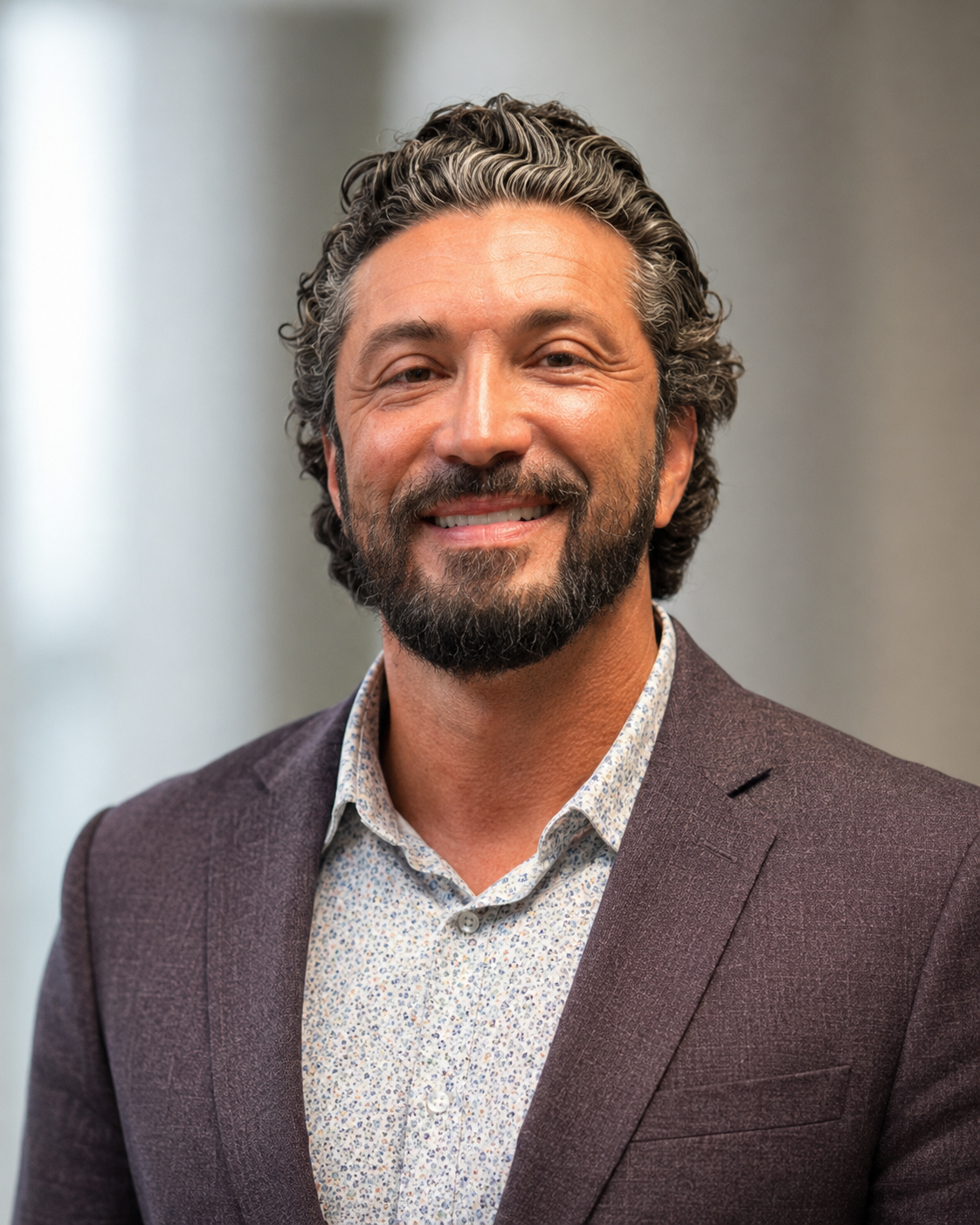
By Shawn Ledig | President, U.S. Hemp Building Association
On Friday, July 17th, 34 people gathered at Cordata Park Pavilion in Bellingham, Washington. Hemp's future in the built environment got a little clearer.
I'll be honest with you: I wish I could have been in that room. The 3rd Annual PNW Climate Week session, “Decarbonizing and Decolonizing the Built Environment,” was put together by people who don't just talk about change, they build toward it, literally. And what happened in Bellingham that evening is exactly the kind of grassroots, community-first work that USHBA exists to amplify. So let me tell you about it.
Caption: The 3rd Annual PNW Climate Week hemp-lime session, Cordata Park Pavilion, Bellingham WA, July 17, 2026. Hosted by Whatcom WAVES and NWLLCC.
Photo credit: Whatcom WAVES / Michael Tooms.
The People Who Made It Happen
The session was a collaboration between two organizations that deserve to be on your radar. Whatcom WAVES, now Washington WAVES as the organization expands statewide, and the Northwest Living & Learning Community Collaborative (NWLLCC), co-founded by Michael Tooms and Suneeta Eisenberg M.Ed.
Here's a detail I want to highlight, because it matters to our members. Michael Toomes is a US Hemp Building Association Member & Hemp Build School Mastermind graduate. What you're seeing in Bellingham is what happens when our training gets into the right hands: a graduate comes back to his community, builds an organization, hosts a 34-person educational event three years in a row, and starts moving real ground. That's the pipeline working.
They brought in Micaela Machado of Old Pueblo Hemp Company out of Arizona, and I want to spend real time on Micaela because she deserves it. She's actively leading workforce and labor development in Arizona around hemp construction and has already launched a youth camp program that introduces the next generation to this material. She didn't just travel up from the Southwest to present. She brought a living, working program that proves hemp building education can be youth-focused, culturally grounded, and scalable. If you're not following her work, start now.
The Evening's Agenda
The session was structured to move from education to experience to community. It ran in four parts: a presentation from NWLLCC on the decarbonize-and-decolonize framework; a presentation from Micaela and Old Pueblo Hemp Company on Southwest programs and workforce development; a communal dinner alongside a screening of the Green Buffalo film; and an open Q&A and networking session. That's not a typical conference format. It's a community format. And it showed in the room that showed up.
The Room Itself
Here's what struck me most: the breadth of who came. Youngest attendee was five months old. Oldest was 75. In between: high school and graduate students, community land trust founders, farmers, solar industry professionals, and Whatcom WAVES volunteers whose identities span trans-fem, Native, and brown communities. A master plasterer from Mexico. Adam Powers from KeyTech Labs.
Two policy leaders were in the room: Kaylee Galloway, Chair of the Whatcom County Council (and a Whatcom WAVES soccer player, which tells you everything about the community these organizers have built), and Samantha Cruz, who's running for Port Commissioner District 4. That's not a coincidence. That's what happens when you build trust in a community before you ask them to care about a building material.
“That's 34 people who now know what hempcrete is, what it does, and why it matters. And that's 34 conversations that will ripple outward.”

Caption: Michael Toomes, Danny Desjarlais, and Suneeta Eisenberg M.Ed.
Photo credit: Whatcom WAVES.
What They Taught: Decarbonize and Decolonize
The session's framework wasn't just a title. The presenters defined both terms and held them accountable to something concrete. Decarbonize means reducing and eliminating CO2 emissions from the built environment, specifically the walls of a house, using hemp. And decolonize, in this context, means a model of shared equity and resources in land, using owner-built strategies to bring health, happiness, and hope to people over profit.
The slide that stayed with me was the one on the K-shaped economy: the top earners accelerating growth while lower-income, first-time, and southern buyers are left in a non-wealth-generational gap. Hemp building isn't just a sustainability play. In this framework, it's a tool for community land trusts, for the LILAC model (Low Impact Living Affordable Community, a mutual home ownership approach that ties housing costs to income instead of market price), for putting the means of production back in the hands of the people who live in the houses. That's a conversation worth having in every USHBA chapter.
The Material: What Hempcrete Actually Does
For members looking for a clean reference on the science, here's what the presentation covered on hempcrete's properties:
Non-toxic: free of VOCs and petrochemicals
Mold resistant: the high pH of lime actively inhibits mold growth
Fire resistant: the 2024 ASTM test confirmed a 1-hour fire rating
Pest resistant: the high pH also repels termites and other pests
Vapor permeable: maintains 40-60% humidity and regulates moisture
Thermal mass: thick walls provide natural temperature regulation
Carbon store: hemp absorbs carbon as it grows; lime carbonates and stores more CO2 over time
Recyclable: can be deconstructed and reused
Insulating: R-2.1 per inch
Acoustic: excellent sound absorption
Built to last: centuries-old structures in France and Japan
And the formula, for anyone who wants it: 1 part hemp hurd. 2 parts hydraulic lime. 2 parts water. Mix for about a minute until it balls up. Tamp into the form. Cure two to six weeks depending on site conditions.
Four Ways to Build With It
The session walked through all four primary application methods. Here's the tradeoff table as the presenters laid it out:
Method | Speed | Cost | Best for |
Cast in place | Slow | Lower | Community builds; hands-on learning |
Spray (Ereasy) | Fast | Higher equipment | Speed; large areas; labor savings |
Blocks | Medium | Offsite flexibility | Year-round production; familiar to trades |
SIPs | Fastest on site | Offsite cost | Production housing; quick erection |
Cast-in-place is where most community builders start, and it's where Whatcom WAVES has done their own hands-on work. But the block and SIP systems are where the material becomes familiar to conventional construction trades, which is the adoption pathway that scales.
Three Years of Showing Up
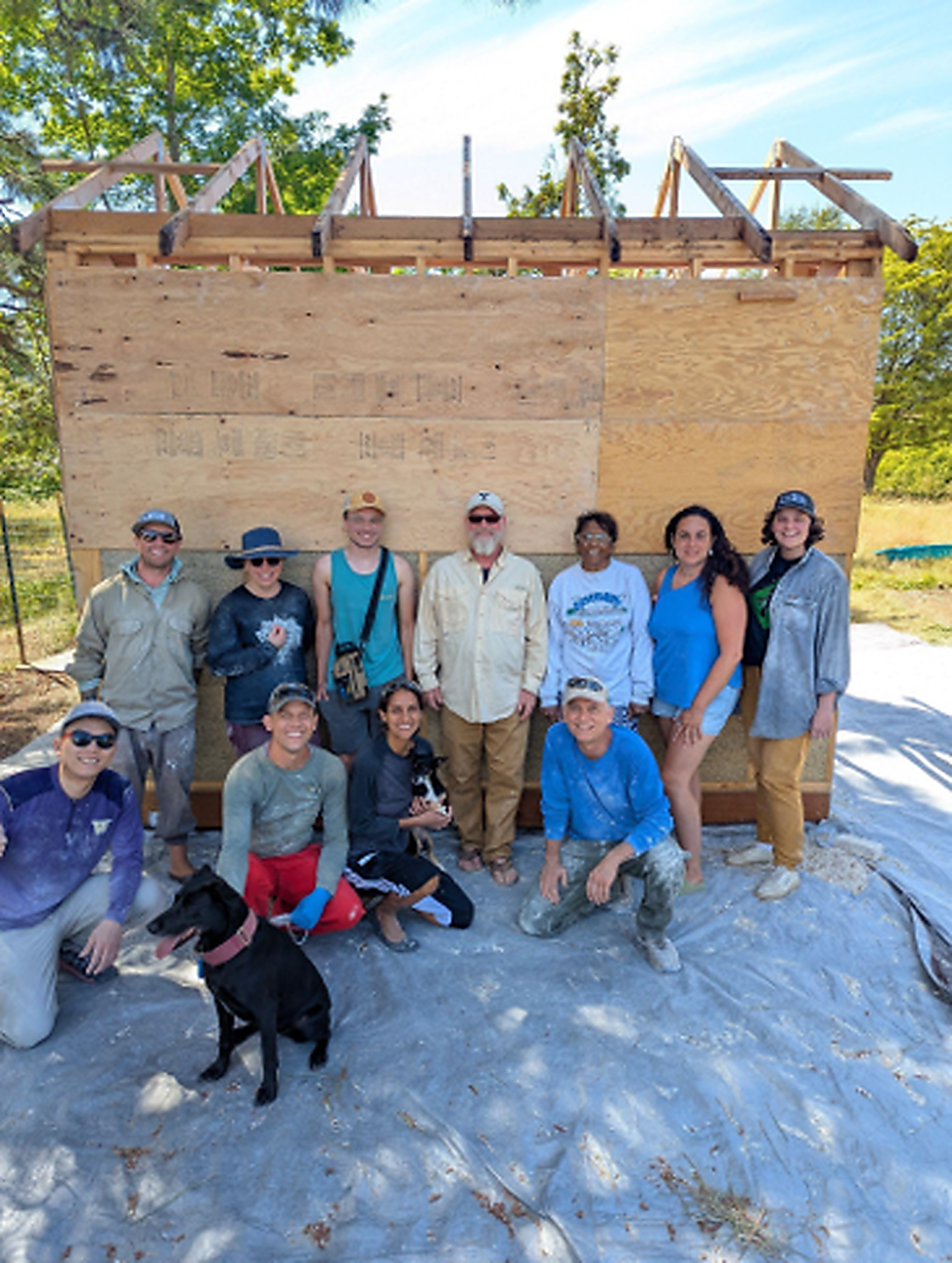
This didn't happen overnight. Whatcom WAVES and NWLLCC have been doing the physical work alongside the education. In July 2024, they ran a hands-on hempcrete greenhouse workshop using the cast-in-place method alongside instructor Danny Desjarlais, a passive solar build that gave participants real experience with tamp-in-place construction. In July 2025, they hosted the Hempcrete Shed Workshop, a multi-day build with a full crew. And in July 2026, Tim White came to transfer his years of knowledge. Three years. Three builds. Each one growing the network.
The plaster workshop is next. Dates aren't set, but they're coming. Follow Washington WAVES as they completed their transition in March 2027 and watch for teasers from the documentary being produced by Emmy award-winning filmmaker Remy.
Where They're Going: 33 ADUs
The roadmap in the presentation is worth naming because it's specific. They're at step two of four: design and educate, which is where they are now. Step three is develop 33 additional dwelling units statewide. Step four is analyze and evaluate data for healthy homes.
That's not a vision statement. That's a plan. And it ties directly to the code and policy work our association has been doing at the national level. Austin and Minnesota recently adopted the hemp-lime code appendix into their local building codes. Every community educator building trust at the grassroots level, the way Suneeta, Michael, and Micaela are doing in the Pacific Northwest, is part of why those adoptions happen.
The Sports Connection
Suneeta just joined the national board of directors of PLAY GAP, an organization working at the intersection of sports and women. She'll be speaking at the University of Washington on climate impacts, and it's worth paying attention to why this matters for our industry.
In France, the Pierre Chevet sports hall in Croissy-Beaubourg, designed by Lemoal Lemoal, became the first public building in France built with hempcrete. The hemp was grown and processed within 300 miles of the site. The building performs exceptionally for thermal comfort and acoustics, which is exactly what an athletic facility needs. It's a standing proof that hempcrete belongs in the spaces where communities gather, play, and compete, and it's the kind of story that reaches a different audience than the typical homebuilder conversation.
Whatcom WAVES also joined the United Nations Football for the Goals initiative, choosing one of the UN's 17 Sustainable Development Goals each year alongside goals 5 (gender equality), 13 (climate action), and 17 (partnerships). The global network that Suneeta has built through soccer connects the Pacific Northwest to advocacy work she's done in Kenya and Uganda. The just-transition conversation in the built environment is happening on multiple continents, and Whatcom WAVES is in that conversation.
The Pierre Chevet sports hall: In France, A Hempcrete Sports Center Demonstrates the Material's Promise — Metropolis Magazine
Congratulations to Our USHBA Membership Winners
Two attendees won complimentary USHBA memberships at the event. Congratulations to Lloyd Devold and Clara Reid. We're glad to have you, and we'll be reaching out to welcome you into the community.
A Grant Worth Knowing About
The Frontline Funding Collaborative's HEAL Capacity Grant Program through Front and Centered denied Whatcom WAVES in Round 1 but automatically added their application to Round 2, which opens September 10, 2026, with a deadline of November 13, 2026. Eighteen grants of $20,000 each, for Washington State organizations doing environmental justice work with frontline communities. The work Whatcom WAVES and NWLLCC do fits the criteria precisely. If your organization qualifies, this is worth a serious look.
Apply here: Frontline Funding Collaborative HEAL Capacity Grant — Front and Centered
What I Take From It
Suneeta closed her note to me with something I haven't stopped thinking about: “We just are advocates and educators learning as we grow through what we go through.”
That's the whole thing. We're not waiting for perfect conditions to teach, to build, and to show people what this material can do. We're doing it now, in pavilions and community centers, with families and county council chairs in the same room, over dinner and a film, with a five-month-old in the crowd.
Michael, Suneeta, and Micaela: the notoriety you've earned in this space is real, and USHBA is proud to stand behind your work. And to the 34 people in that room on July 17th, you're part of this movement now. Welcome.
Onward,
Shawn Ledig
President, U.S. Hemp Building Association
Credits & Resources
Michael Toomes (USHBA Hemp Building Member) and Suneeta Eisenberg M.Ed, co-founders, Northwest Living & Learning Community Collaborative (NWLLCC) / Whatcom WAVES
Micaela Machado, Old Pueblo Hemp Company
Event: 3rd Annual PNW Climate Week, Cordata Park Pavilion, Bellingham WA, July 17, 2026
USHBA membership drawing winners: Lloyd Devold and Clara Reid
Pierre Chevet Sports Hall, Croissy-Beaubourg, France (Metropolis Magazine, Dec 2021)
HEAL Capacity Grant Program, round 2 open Sept 10 – Nov 13, 2026 (Front and Centered / Frontline Funding Collaborative)

Comments